
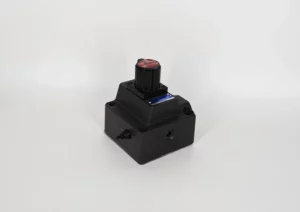
A replacement valve enquiry may contain a model photograph, a pressure rating and little else. Take the stopped condition of a winch: the load remains on the system after the operator releases the control. A hatch cylinder has a pause between strokes to account for as well. Record what must happen during that pause in the circuit specification, alongside the required movements.
For hydraulic valve selection in marine engineering and shipbuilding, send that operating description with the enquiry. In the YuciYuken range, a buyer can start with the required pressure, flow or directional control function, then consider stacking or cartridge construction. The valve category narrows the search; the circuit still decides which arrangement fits.
Define the Movement and the Stopped Condition
An actuator symbol alone leaves out the sequence. Annotate it with the required extension and retraction, or motor rotation, including slowing and pauses. Beside each stage, show the direction in which the load acts. A resisting load and a load that can drive the actuator present different control requirements, particularly during slowing and stopping.
On a replacement enquiry, the center position in the directional valve symbol deserves an early check. Which ports connect when the operator releases the control? Where does pump delivery go? Can the actuator ports communicate with the tank? Similar valve bodies can contain different spool functions.
YuciYuken directional control valves include manual, solenoid operated and electrohydraulic designs. The operating method is a separate choice from the spool function. With pilot operation, establish the pilot supply and drain conditions as well as the electrical command, where applicable. A blocked center spool alone should not be treated as a load holding guarantee; any required holding function needs its own circuit assessment.
Size for the Oil That Actually Passes Through the Valve
The valve in a cylinder return line may have to pass more oil than the pump delivers into the opposite chamber. Start with the effective area of each chamber and the required stroke speed to calculate the two flows. Use the highest relevant value for the passage under review, keeping the return and pilot paths separately identified in the enquiry.
Pressure needs the same attention to location. Record normal working pressure, the intended pressure limit and the conditions at the tank connection. What backpressure reaches that connection in service? Use it when checking the valve limits. Compare the proposed valve pressure loss at its required flow too; the nominal size does not tell you how much pressure the passage will consume.
Direct operated relief valves, pilot operated relief valves and pressure reducing valves are all included in the YuciYuken pressure control range. Locate the pressure to be controlled on the drawing: a relief path discharges oil to limit pressure, whereas a reducing valve regulates a downstream branch. Their different connections and purposes belong in the circuit specification before a pressure setting is discussed.
YuciYuken flow control options include throttle valves, one way flow control valves and needle valves. They regulate flow and therefore affect actuator speed. For a one way arrangement, mark the restricted direction on the drawing. Changing pressure difference across a throttle can change its flow at the same setting. A specified speed must therefore be reviewed against the expected pressure changes and any need for compensation.
Choose an Assembly That Can Be Installed and Serviced
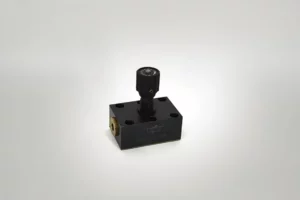
Pressure regulation may be incorporated in either a stacking or cartridge design. The next decision is how that function will connect to the rest of the circuit. Trace the oil paths first. Then compare where the assembled valves would sit, how an adjustment would be reached and which surrounding components would obstruct removal.
Stacking Valves for Modular Circuits
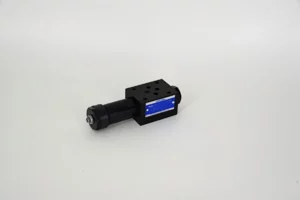
In a YuciYuken stacking assembly, mounting screws hold the modules together. Oil travels through passages in the stack, replacing external pipe connections between those functions. Modules are available for relief and sequence control, throttling, check and pilot operated check functions. Several pressure and flow control tasks can share this compact assembly.
Check the whole stack, including module order, port identification, seals and bolt length. Leave enough access to read identification marks, reach adjustments and remove the component that needs service. A matching mounting face is useful evidence, but it does not establish that two modules have the same internal connections or working limits.
Cartridge Valves for Manifold Integration
YuciYuken cartridge valves use cartridge elements and covers with pilot passages to provide pressure, flow or directional control. High pressure and high flow circuits are among the applications for this construction. The element, cover and pilot connections work together; the element alone does not describe the complete installed function.
For a manifold enquiry, include the cavity and passage drawings. Check pilot routing, drain requirements and access to the covers. Do the symbols specify the same control action? That comparison is needed even where two cartridge elements appear to have the same outside dimensions.
Check the Actual Installation Environment
A protected machinery space and an exposed deck location call for separate installation reviews. Include the expected spray or condensation exposure and both ambient and oil temperature ranges in the enquiry. The supplier needs to check those conditions against the offered coil, connector, seals and surface protection. Specify the electrical enclosure requirement as part of that review.
The fluid specification and cleanliness requirement need agreement between the circuit designer and supplier. Access for filter maintenance, sampling and flushing also belongs in the installation review. Check the removal route for a valve as well as access to its adjustments. The required space must still be available after surrounding equipment is installed.
Documentation has to be settled during the offer review. The owner or applicable classification rules may call for particular certificates or test records. Obtain documents for the exact component or assembly being offered and check their scope. Neither a broad product name nor a catalogue application heading proves marine approval, salt spray resistance or suitability for a safety function.
Send a Circuit Based Enquiry to TZYY
Send TZYY the circuit with the controlled function marked on it. Include the duty description and operating figures, then attach the mounting drawing, fluid specification and electrical details. Record the temperatures and pressure conditions alongside the working and peak flow. One further condition belongs in the hydraulic valve selection enquiry: the actuator state required when electrical power or pilot supply is lost.
On replacement work, keep the existing model code and a legible nameplate photograph with the stack or manifold drawing. Ask the supplier to identify any differences in spool function, pilot routing, seals or connectors. Close out those differences while reviewing the offer, before the replacement enters the shipyard purchasing schedule.
FAQs
Q1: Is a directional valve enough to hold the load?
A1: A stopped command is not proof of load holding. Internal leakage and the rest of the circuit affect movement after the command stops. The circuit designer must assess the required load holding arrangement, including behavior after loss of electrical power, pilot pressure or another relevant supply.
Q2: Does an ISO mounting pattern make stacking valves interchangeable?
A2: It establishes only part of the fit. Compare port connections, module order, function, pressure and flow limits, seals and fasteners. In an existing stack, compare the proposed module against the complete drawing and model codes. Bolt holes tell you where it mounts, but not which internal passages it will connect.
Q3: Which certificates belong with a marine valve enquiry?
A3: The vessel project and equipment duty determine that requirement, together with owner specifications and applicable classification rules. Ask for the certificates or test records covering the proposed assembly. Check the named component and the scope with the supplier before accepting a document as evidence for the purchase.