
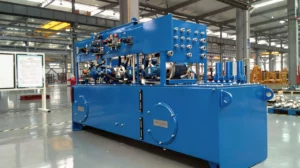
A hydraulic test bench can meet its quoted maximum pressure and still fail the job you bought it for. That happens when the request describes a headline rating but leaves the real test cycle, measurement points, or pass criteria open to interpretation. The fix is to specify the component under test first, then define the operating envelope, data, fixtures, and acceptance method around it.
Using a standardized evaluation matrix enables project engineers and purchasing personnel to compare vendor offers in a fair and consistent manner. Late changes to required sensors, cooling, control systems or connectivity are minimized.
What Should Your Hydraulic Test Bench Prove?
Start with the decision you need to support. A production screening test bench may need a very short, extremely repeatable pass/fail test. A development test bench will need to test at more operating conditions and support the diagnosis. As long as the purpose of the test is not clear, suppliers will quote what looks like similar equipment on paper but answers different questions.
Start with the component and its variants
List the specifics for the Device Under Test (DUT) such as model family, ports, mounting locations, direction of drive, physical dimensions of the DUT. If adapters are already in use for the DUT list them too. This is important because a single fixture may not safely test different models with different connections, stroke length and reaction force. Also list all the other variants on the same test bench as the DUT.
Next, write the test sequence as states rather than as a sentence such as “check performance.” For each state, note how the DUT is connected, what condition is applied, what must stabilize, which channels are read, and what makes the result acceptable. Include startup, normal operation, transition, shutdown, and any repeated or endurance cycle that is genuinely required.
Turn the sequence into a test matrix
A compact matrix exposes missing decisions before they become design changes. Give every row a test name, operating condition, dwell or cycle count, measured values, limit, and output record. Separate production acceptance from diagnostic measurements: the first determines pass or fail, while the second helps an engineer explain why a unit behaved that way.
TZYY‘s listed applications cover test benches for pumps, motors, valves, and cylinders, as well as servo measurement and control. That range is useful when the DUT family, not a generic “bench size,” is the starting point for the discussion. The hydraulic test bench applications shown by TZYY can help frame which application category fits your test objective.
Which Limits Should Hydraulic Test Bench Design Cover?
The design should encompass the entire operating cycle, not just the highest numbers. A request for maximum pressure of X does not advise the supplier how long that is sustained, what flow is required at the same time, how many cycles are intended to be run, or what readings are important at lower loads.
Size for the whole cycle
List pressure and flow together at each test state, along with speed, torque, stroke, temperature, and load wherever they apply to the DUT. For a first estimate, hydraulic output power in kilowatts is pressure in bar multiplied by flow in litres per minute, divided by 600. This is a theoretical hydraulic value; drive sizing must also account for system losses and the way the duty cycle repeats.
That distinction matters. A short peak and a long continuous test can impose different demands on the power unit and heat rejection. State the normal operating range as well as the extreme point, the time spent at each point, and the expected rest period. This gives the supplier a basis for selecting a hydraulic test bench design that can complete the real job without treating every cycle as a worst-case peak.
Include fluid, heat, utilities, and access
Record the fluid type and condition, cleanliness requirements, ambient range, available electrical supply, cooling water or air, floor space, and operator access. Note whether the bench runs unattended, whether samples are hot after testing, and how hoses or heavy DUTs are handled. These details affect the reservoir, filtration, cooling, guarding, fixtures, and maintenance access.
A generic reference to safety in a purchase order must not be left to a line in the order. The supplier must describe how safety is achieved in the proposed setup to access pressurized parts, to handle stored energy and to bring a running test to a stop in case of a fault. The necessary measures to achieve safety will depend on the machine and the workplace. A list of the hazards and the operating method must be discussed and resolved during the design review. Useful reference is the hydraulic product range provided by TZYY for test systems that are to operate with a specific pump, motor, valve or cylinder family.
How Should Pump, Valve, and Cylinder Tests Shape the Layout?
The test object typically defines the new load path, a new test fixture and relevant new test measurements. Even if a shared test fixture frame is used, a single test layout is not equal to a second test program. Interchangeable parts and compatible test cycles are not necessarily the same as interchangeable test programs – some items are best kept as dedicated test programs.
What belongs in a hydraulic pump test bench?
A matrix for a hydraulic pump test bench could define the different inlet conditions, the drive, the operating points and the measurements to be recorded during the test according to the test plan. Depending on the objective of a test, the matrix can contain e.g. flow under certain conditions, pressure development, leakage, temperature development, a cycle repetition etc. It has to be clear who sends out a signal and who receives it. The matrix has to clearly state which value is accepted.
If a motor as well as a pump is included in the application, it should be indicated how load and direction can be changed. A supplier needs to know if one and the same test rig is used for both tests, if connections have to be changed, and if the control sequence has to prevent wrong test setups. This information influences the station layout much more than a “universal” test bench is requested.
What changes for valve and cylinder testing?
A hydraulic valve test bench is characterized by controlled flow paths, clearly marked ports and test conditions which can be reproduced at will. The type of valve and the functions to be tested as well as the required flow and pressure must be specified. The test results for switching and leakage must be recorded. A valve block or manifold to be tested must have its port map and mounting details specified.
For a hydraulic cylinder test bench, describe the cylinder’s length and mounting envelope, stroke, end connections, direction of loading, and the conditions for extension and retraction. If drift, leakage, or end-of-stroke behavior matters, define how long the condition is held and what counts as a pass. Fixture stiffness and alignment matter because movement in the setup can be mistaken for movement in the DUT.
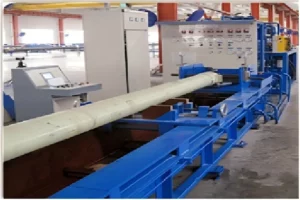
Information on the company TZYY includes a description of their integrated R&D department, their capabilities for casting, machining as well as testing. The company’s application information includes information on test systems that the company uses for component testing. This information is relevant when on the bench trying to connect the DUT with its interfaces to the appropriate test setup. Review the company’s R&D and manufacturing capabilities before you ‘set in stone’ your ideas on fixturing and the interfaces.
What Makes a Test Result Repeatable and Acceptable?
Repeatability is about the bench to agree on how to sense, record and test a test. To ensure that two operators are able to reproduce a test that was approved by someone else and to reproduce the resulting measurements later, more is required than choosing a wide range of sensors.
The TZYY Test bench offer is a mechatronic integration solution for certain functional requirements. Translate this broad objective into a concrete scope for your RFQ: Who will provide the fixture, the sensors, the control system, the test program and the report?
Specify measurement and records
For every channel, name the quantity, engineering unit, expected operating range, sensor location, and whether the value is used for control, display, or acceptance. Ask how the supplier will address calibration status and traceability. A sensor that reads the full range but is too coarse at the normal test point can leave the most useful part of the cycle hard to assess.
State your specific needs for sampling and reporting. Should we collect only a final value, a trend over time, or something in between?
Do results need to be numbered, logged against who last ran the test, including the date, against which test recipe version they were run and whether they passed or failed? Are results to be able to be exported as raw data? Who is to be able to amend test recipes?
Write the FAT before issuing the RFQ
Specify the sample DUT or approved substitute(s) in the purchase request. Outline the test sequence, test conditions, required measurements for comparison, and the documentation required to be issued. Establish the test tolerances and the required stabilization with the relevant people who are owners of product quality and NOT the supplier!
It is also important to check the setup and the safety features such as correct fixture setup, correct recipe selection, correct alarms, correct stop situations and recovery from interrupted cycles. If the test bench can be set up in different configurations, all agreed configurations must be tested. A successful test of one convenient operating situation does not prove the complete application.
FAQs
Q1: What information do we need to send a quote for a Hydraulic Test Bench?
A1: Please find DUT drawings and test variants as well as test conditions, test sequence and required measurement channels and limits as well as fluid and utility constraints and required fixtures and safety issues of interest. Preferable is a test matrix over just a pressure rating. All FAT deliverables shall be sent as well.
Q2: How is a hydraulic pump test bench different from a test bench for hydraulic valves or for hydraulic cylinders?
A2: The DUT changes between the test benches for hydraulic pump test benches, hydraulic valve test benches and hydraulic cylinder test benches. The main difference is the flow path, the actuation or loading method, and the required acceptance conditions.
Q3: Should the FAT criteria be agreed upon prior to the construction of the test bench?
A3: Yes. It is important to outline the sample, sequence, conditions, tolerances, safety measures and required data and documentation in the RFQ or design review. It should be clear what the test station is intended to test and that it is possible to demonstrate the intended test with the completed station as opposed to a limited subset.
Ready to Specify Your Next Hydraulic Test Bench?
Reading about specifications is one thing — turning your DUT data, test matrix, and acceptance criteria into a buildable test bench specification is another. That is where we can help.
TZYY, a subsidiary of Taiyuan Heavy Machinery Group with more than 60 years of hydraulic heritage, integrates R&D, casting, machining, and testing under one roof. Our engineering team can review your DUT drawings, test conditions, and target acceptance criteria — or simply the decision your test needs to support — and help you translate them into a complete, quotable specification for pump, motor, valve, or cylinder test benches.
Send us your test objective and DUT data, and we will get back to you with a tailored proposal.
Get a quote or talk to our engineers.